Wednesday, 20 January 2016

Italy Noir

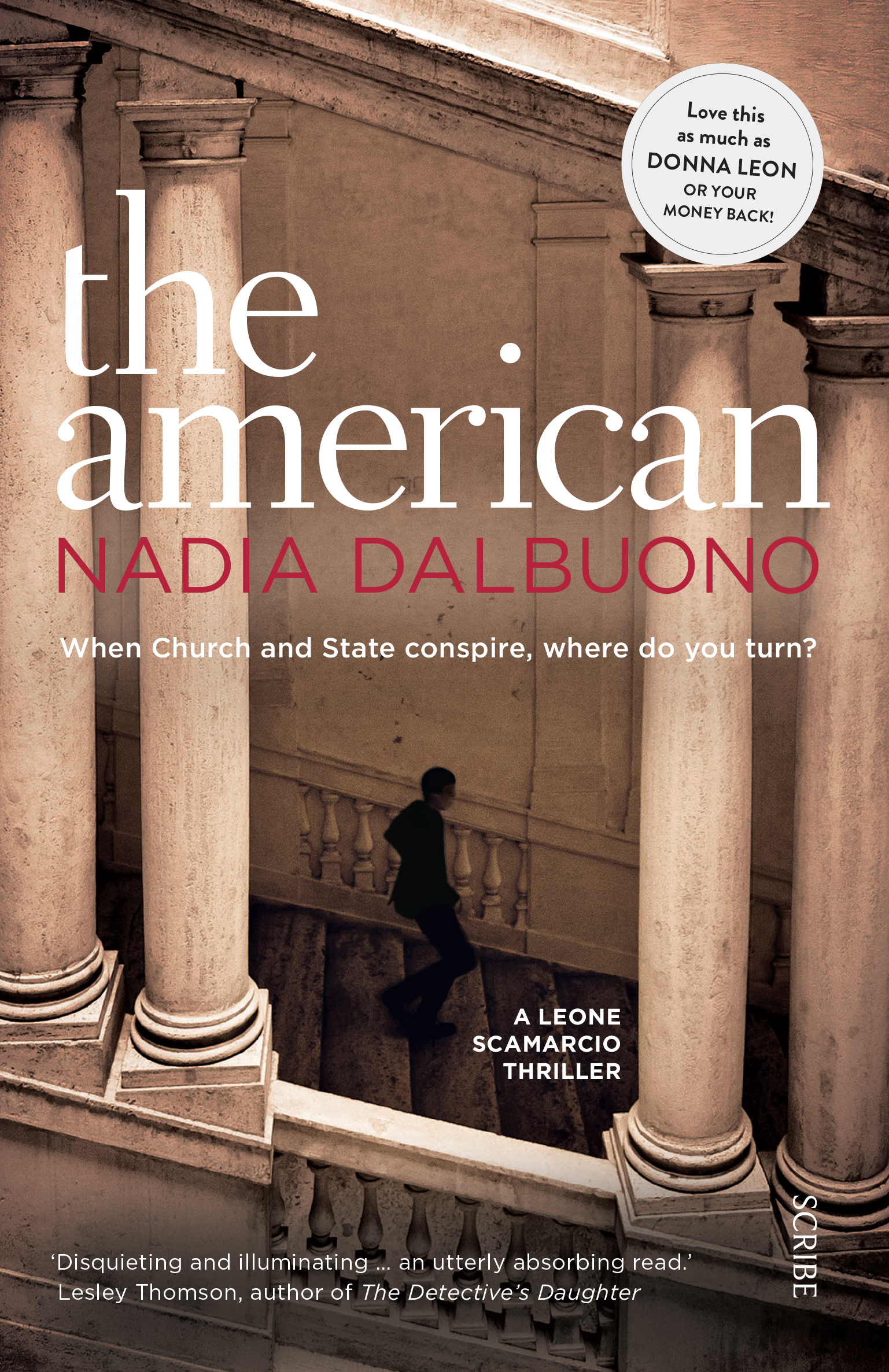
"The American", Nadia Dalbuono

Italy's an odd place.

It's rightly seen as one of the cradles of civilisation, it was a founding member of the European Union, and it's one of the largest economies in the world. 

Despite all this Italy maintains a feel and reputation of somewhere a lot grittier. Perhaps it's the legacy of the extreme left and right wing politics of the 20th century, what we could see as long shadow of 'the mafia', and the overall ramshackle nature of their companies and politics, but Italy feels profoundly different to much of the rest of established Europe.

I'm minded of talking to an Italian friend after rashly purchasing a used (but still over specified) La Pavoni espresso machine a few years ago; he encouraged me to look after it, because along with the Vespa scooter and the original Fiat 500 it summed up what good Italian engineering was, and properly maintained would persist long after Italy had collapsed under its own contradictions.

It's something you can feel on the ground. Working with the technology companies of Bologna and Modena they will sigh if you say need an NDA signed - that will involve getting 'corporate' involved, and thus nothing will happen. Driving through the dramatic hills on the Umbrian-Tuscan border north of Lake Trasimene you periodically catch glimpses on side roads of exotically garbed women on plastic chairs, familiar perhaps outside Naples or Brindisi, but surprising on the edge of Chiantishire. It should be no surprise that Italy provided a fertile ground for Dibdin, Hewson, and Leon, so in this light is there scope for something new?

Nadia Dalbuono's first Leone Scamarcio novel, 2014's The Few, introduced the suitably complicated Leone Scamarcio and insight into seamy underbelly of Italy. Fusing a sprawling political sex scandal into the rich backdrop of Rome, the Mezzogiorno, and Italy's strange continuing predilection for prison islands it delivered an accomplished police procedural that kept attention throughout.

Scamarcio's return deftly avoids the 'difficult second album' challenge, taking promising raw materials found in The Few and refining it into what is a highly polished political crime thriller. Linking the death of Roberto Calvi, the dark days of Italy in the 1970s and 1980s with the confrontation between the Red Brigades and the Italian far right, The American is reminiscent of Frankenheimer's Year of the Gun. It's full of moral ambiguity, shifting loyalties and definitions of truth, and shadowy arbiters of power, and where at times it teeters on the brink of sounding like "all that conspiracy crap you find on the internet" it remains critically just exactly on the right side of the line.

In exploring the complexities of Cold War Italy, with the Red Brigades, Gladio, and the P2 Masonic Lodge Dalbuono posits how the long tail of the 2008 financial crisis and externally imposed austerity could return Italy to the darkness of 1978 or 1982. This is not however what makes The American a great read. What is most satisfying is how Scamarcio emerges as a compromised, ambiguous, flawed yet charismatic character. The interaction between the cop who wants to be clean, the crumbling edifice of the Italian state, organised crime's long memory, and the stirring influence of international intrigue makes for an absorbing read - and the fact that come the ending perhaps more questions than answers are involved leaves you wanting more - and isn't that always a good thing?

Interest piqued? As part of the blog tour accompanying the launch of The American Scribe Books have made an excerpt available, which you can see here. On that note, do please have look at the next stop on the blog tour for The American, over at Tales from the Reading Room.


Disclosure: review copies of The Few and The American were provided by Scribe Books. The used La Pavoni has been properly maintained and is still making fantastic espresso every morning.


Nadia Dalbuono, an excerpt from "The American"

An excerpt from Nadia Dalbuono's The American.

When Scamarcio left the boss’s office, he found the desk sergeant waiting for him in the entrance to the squad room. ‘You’ve got visitors,’ he said.

He was holding open the swing doors for two tall strangers in dark suits. They both wore silver Aviator sunglasses, and their hair was cropped militarily short. Scamarcio’s instinctive assessment was that they were secret service, and probably the Anglo-Saxon variety — English or American.

He walked over to shake their hands, and motioned them to his desk. There was only one spare chair, so he pulled out another from a neighbouring table. The strangers’ arrival was stirring interest among his colleagues, who also knew a spook when they saw one.

He had expected the two men to remove their sunglasses when they sat down, but for some reason they chose to keep them on.

‘English OK?’ said the one on the left, who had blond hair and deeply pitted skin. The accent was American, but Scamarcio couldn’t pin it to a region.

‘Sure,’ he said, wondering if they already knew that he had spent time in the States.

The one on his right crossed his legs, and Scamarcio spotted a gun strapped to an ankle holster. It looked like a Beretta 92 — maybe their standard issue, if they had one.

‘The body you found under the bridge this morning ...’ continued the man on the left.

‘What about it?’

‘He’s one of ours.’

‘A colleague?’

‘No — a suspect.’

‘You’re fast workers. I only sent the photo to our liaison a few minutes ago.’

The stranger didn’t offer an explanation, so Scamarcio asked, ‘What agency are you from? Do you have cards?’

‘We’re US authorities.’

‘That doesn’t tell me much.’

‘That’s all you need to know.’

That settled it. He would give them the bare minimum, nothing more. They were about to piss all over the place — to mark out their territory, as usual.

Pitted skin continued. ‘The guy you pulled out from under that bridge was a fraudster, responsible for manufacturing millions in counterfeit dollars. It was a major op. We’d been on his tail for some time, but it was only recently that he came to realise it. When he sensed that his time was up, he decided to end his life.’

‘Why come all the way to Rome?’

‘He had family here. We think he wanted to say his goodbyes.’

‘This fraudster have a name?’

‘It’s need-to-know.’

‘I need to know.’

‘We don’t share that assessment.’

Scamarcio took a breath, and bit down on a pencil. He tasted lead in his mouth, and wished he could wash it away, but he didn’t want to get up.

‘Listen, Detective, we’re just trying to do you a favour. We know you flying squad guys have your hands full, so we wanted to spare you the legwork and take this one off your slate. We’ll supply you with all the relevant paperwork so you can dot your I’s, cross your Italian T’s. No point breaking a sweat when someone is happy to clean up for you.’

Scamarcio said nothing for a few moments. ‘You know it’s not that simple. This happened on Italian soil, so I’m obliged to investigate.’

‘You’re not listening, Detective,’ said the guy on the right, whose southern lilt was deep and smooth like a Louisiana whisky. Although his eyes weren’t visible, his terracotta tan and perfect white smile seemed to suggest that he was much better looking than his colleague. ‘All we’re saying is that we can help you sew up your case nice and tight in time for you to head out to the coast for the weekend. You guys still go to the beach in October? — seems warm enough to me.’

Scamarcio said nothing. He wasn’t going to be their foreign stooge they could squeeze any which way they wanted. ‘What paperwork do you have?’ he asked eventually.

‘It will be on your desk by close of play tomorrow, and then you can head down to Amalfi for a nice bit of R and R. That’s what I’d do in your position. Really I would.’

The southerner’s words sounded less like a suggestion and more like a threat this time.


Disclosure: review copies of The Few and The American were provided by Scribe Books. See my thoughts on The American here.

Saturday, 16 January 2016

Doing wine the biodynamic way

"Chateau Monty", Monty Waldin

Sometimes a happy accident is just that.

My mother will tell you, and indeed anyone who'll listen, that she struggles with Christmas presents, that she never knows what to get someone, but she does sometimes try, and sometimes she gets it very very right.

I've told my mother about helping a friend with their vine harvest, I've introduced her to more adventurous wine than she's likely to find in M&S, and she's even come to Brockley Market and met the magnificent people at L'Atypique. So she got into her head that wine is something I'm enthusiastic about, and that I'll like the biography of an English bloke trying to make wine in South Western France.

There's no surprise here.

She's Right. I probably will enjoy it.

Initial trepidation that this might be a somewhat sub Year in Provence account of a bumbling rosbif flailing around with the idiosyncrasies of French life are rapidly laid to rest. Chateau Monty is an engaging account of setting up and running a biodynamic vineyard, mixing the homely anecdotes of life in south west France with matter of fact details of what making wine biodynamically involves.

Biodynamics? Well yes, I suppose that does need a bit of explanation. It involves taking principles linking growth with elemental 'forces' connected with the orientation of celestial bodies and energies that can be captured and returned to the soil to help growth. There are times when it comes across as nine parts bollocks. The notion that horn manure is powerful because a cow generates more energy than can be used in its existence, thus it all gets stored in its horn, which can then be transferred to manure stuffed in it and then buried might stretch some people's credibility.


A natural wine, albeit not from Monty Waldin's vineyard.
Leaving aside the skepticism and applying some empirical observation though and there might be something to it. Natural and biodynamic wines can be absolutely fantastic (disclosure, I'm having one now - a marvellous Angevin red from Domaine Mosse) so maybe we should pay attention. There's also something engaging about the way Waldin evangelises about it that makes you want to experiment and see how things might work - after all it doesn't do any harm to plant according to a biodynamic calendar and pay a bit more attention to what sort of chemicals you're sloshing around. If Chateau Monty encourages you to be a bit more creative about what you do with your garden or any piece of land you work, or maybe more realistically drives you to try something slightly more adventurous wine wise than standard supermarket fare then it'll certainly justify the read.

Amusingly I let my vineyard owning friends know that I was reading Chateau Monty. They laughed and said they'd read it too. They'd enjoyed it, found it useful in the context of how they were thinking about wine, and it helped convince them that they could set up a vineyard of their own. They've now got a magnificent vineyard in Kent, and as Woodchurch Wine produce a very good English sparkling wine. For this alone we all should be grateful to Chateau Monty.
Vines inspired by Chateau Monty at Woodchurch Wine.

My response to Chateau Monty hasn't been quite as extreme. I've not decided to jack it all in and start a vineyard, but I have thought about burying a cow horn filled with manure on the allotment and seeing what happens. 

What harm could come from that?

Thursday, 31 December 2015

The Last Spike

"Rails across Canada: A Pictorial Journey from Coast to Coast", David Cable


Despite sharing a telephone dialing code with its more populous neighbour to the south, one area where Canada can hold its head up with a certain level of distinctive identity is in its transcontinental railroad. Just as impressive an achievement as the American drive from sea to shining sea, the twin railroads of the Canadian National and Canadian Pacific span the continental lands mass covering over 30,000 route miles of track.

Culturally there's something very resonant about Canada's railways - perhaps it's because in the great north there's more isolation and the railroad provides one of the tenuous filaments connecting elements of civilisation in the opens wastes together. From the iconic image of Donald Alexander Smith hammering home 'the last spike' at Craigellachie in 1885, through E J Pratt's epic similarly titled narrative poem, to the Cowboy Junkies and their spectacularly melancholy ninth track from 1992's "Black Eyed Man". 

Those looking for a documentary history of the birth of Canada's railways, or indeed an insight into the nature of today's rail system, will not find this in Cable's "Rails across Canada", for this they would be better to start elsewhere, perhaps with Berton's two volumes on the system's origins ("The National Dream" and "The Last Spike"), but as context there is some real value to be had here. In just over 200 pages of photography taken over the course of several journeys across Canada Cable documents the reality of Canadian railways, showing the scale of engineering, the topography dealt with, and the reality that much as in the United States railways in this part of North America are enjoying a renaissance - just one that is comparatively invisible as it is one executed with passengers.

It's a book of few words, but still one that rewards leafing through, discovering Cable's engagement with Canadian railroads and getting a feel for trains draw such a vast country together. It's enough to inspire you at some stage to devote the time to riding the three day journey across the continent, but equally makes you think about the run of the mill elements that through freight stitch the continent together. Can one still dream of hitching a ride on the longest train you ever saw? 


Disclosure: a review copy of Rails across Canada was provided by Pen and Sword Books.

Thursday, 10 December 2015

Strange Things Happen at Sea

"Death of a Supertanker", Anthony Trew


For all the efforts of the UK Hydrographic Office and its international peers, the oceans are still uncharted spaces. The rules of normality become suspended and distorted; what is transgressive ashore becomes accepted when out of sight of land. History is littered with such incidents, running through Tudor Piracy, the Russians firing on the Gamecock Fleet in 1905, and countless Cold War encounters. Much of the traditional narrative on this circulates on the high politics of state, but scratch beneath the surface and there is a strand of stories equally rich and somehow more accessible when you look to merchant shipping. As the likes of Rose George point out, the loss of a commercial airliner will be guaranteed to seize the headlines, the disappearance of a merchant ship, unless it comes to grief in sight of land, will often go unreported and uncommented.

Anthony Trew (1906-1996), novelist and former South African Naval Officer, first came to me in the 1980s with The Antonov Project, a classic Cold War conspiracy pot boiler which sadly has not aged quite as well as might have been hoped. By contrast Death of a Supertanker resonates of a maritime world more recently exposed to us by the aforementioned Rose George and Horatio Clare in Deep Sea and Foreign Going and Down to the Sea in Ships. Death of a Supertanker brings us directly into a world described in Noel Moster's Supership, and exposes the level to which ships cease to become the emotional engagements that they were in the classic era described by Alan Villiers and Adrian Selgimann, and become financial instruments, there to serve base levels of profit and loss, and where consigning a ship to layup is nothing out of the ordinary.  

Very much of its time, with a layer of casual sexism, and a reflection of the geopolitical world of the late 1970s Death of a Supertanker is distinctly a period piece, but usefully represents a period where shipping eras overlapped. Simultaneously this was a period when crews could still repair to a bar before dinner but there was the looming prospect of 36 hours loading in the Gulf before a turnaround and another 6 weeks voyage back to Rotterdam. The halcyon days of the supertankers, perhaps best typified by the French Shell vessels Batillus or Bellamya are evoked here, but so too is the long tanker slump, and the prospect of layup and redundancy, ships riding forlorn in Scottish lochs and Norwegian fjords.

There's a certain poignancy to this too. Many seafarers dream of managing to make the leap back ashore. As Death of a Supertanker closes one of the officer's secures what to him is a plum job - a loading master in Abadan, Iran. With the benefit of hindsight that the passage of time grants us one can't help wondering if that was the smartest move for him...

At its heart Death of a Supertanker is about maritime economics and the shady criminality that can exist at its boundaries. Decisions taken in small anonymous Swiss headquarters impact on the lives of the ordinary sailors aboard the Ocean Mammoth, and while it may frustrate the reader that at this level there are many hanging threads regarding whether or not the fraud leading to the loss of the supertanker pays off or indeed really how it all took place, in many ways this reflects the shadowy nature of the industry, and contributes to a feeling of realism.

Would all this appeal to someone not au fait with how shipping works? The truth is I suspect it might not. Death of a Supertanker is an ambiguous novel and there's a lack of certainty to it throughout, indeed I challenge anyone to be able to say conclusively really what the narrative chain of events described should be. Don't come to it looking for a parcelled up self contained novel - for this maybe Justin Scott's The Shipkiller might be a better bet, but instead use it as an insight into seafaring life in the 1970s, and one which still resonates.

Sunday, 22 November 2015

Four Kinds of Fish

"Day of Atonement", Jay Rayner

There are times when you end up with a novel that confounds expectations. Tempted by a free promotion on it for Yom Kippur, Jay Rayner's Day of Atonement has been sitting on my phone for a while, and when, stuck for something to read on the tube, it was opened, I wasn't entirely sure what to expect.

The last cookery novel I can recall reading (and I'm sure there's been something since) was going through Anthony Bourdain's Bone in the Throat and Gone Bamboo, which managed to be simultaneously entertaining and depressingly dark, so in terms of expectation management Rayner's Day of Atonement has a bit of baggage.

Starting with an elderly ex con on the contemporary Kent coast there's an initial feeling that we might be in Bourdain territory, but that's soon stripped away and we've got an engaging wide ranging rites of passage cultural narrative of London Jewish entrepreneurs through the 1970s, 80s, and 90s. There's a rich sense of place and culture with the distinctive argot of London's Jewish community richly captured combining veracity and an ability to make you smile.

Deep down Day of Atonement isn't really a crime novel, but it's not one where the expected deeply bad things happen. Somehow while there are where you suspect it might be about to turn all a little bit Goodfellas it doesn't. People don't end up necessarily in a shallow grave, and a level of cocaine dependency in the 1970s shouldn't really come as a huge surprise to anyone.

So Day of Atonement was free, so I can't even ask a question of whether even as a discount purchase, was it worth it? But there is a more sophisticated question revolving around whether it rewarded my time and here happily things can be a lot more conclusive: of course it was. Mal and Solly become characters whose stories compel as they move from adolescence to old age, and while it is at heart a morality play, there is a sense of predominantly reasonable wholesome fun (even including Judy the Blow Job Queen) that suffuses the novel.

And yes, it does make clear that the epitome of a good and lavish party is making sure that you don't just have three, but four fishes served. This is probably a life lesson for all of us, gentile or otherwise.

Jay Rayner makes it clear that this is a pre 9/11 novel, a product thus of the very short 21st century where there was a window to see the world through something of a different lens, which gives Day of Atonement it's particular flavour. Try it, I think it's one you might relish, a little like chicken soup.

Saturday, 14 November 2015

Got wood?


"Norwegian Wood: Chopping, Stacking, and Drying Wood the Scandinavian Way", Lars Mytting


Autumn took a while to get going this year. Barely a week ago we were talking about how unseasonably mild it was. That said there have been a few times when November dampness creeps into the bones, and there's nothing quite like a wood fire to sort that out.

Of course now we're properly into blustery autumn, and I'm eyeing up my woodpile, wondering how far through the winter it'll get me, and very grateful for the wood stove in the sitting room (a Charnwood C4 for those interested in such details).

Into this environment comes Norwegian Wood. Not a track by the Beatles, nor a Haruki Murakami novel, but instead a beautifully produced tome on, you guessed it, Norwegian wood. As a country Norway does winter rather more profoundly than the UK - that's geography for you I guess - so it's maybe understandable that their approach to chopping and burning wood is a little more thoughtful. Not for them the indifferent net of soggy logs procured from the petrol station - in Scandinavia it's a process that involves taking a long view, something to go with aquavit and lutefisk to help you through the long dark winter.

This is something that suffuses Norwegian Wood. It's not the sort of work that you can read linearly, instead it rewards dipping into, grasping an element of wood lore that you can apply to your own wood piles and fires, and through this gain an insight to the accompanying cultural context.

Looking at this way Norwegian Wood is a genuinely useful book. To take one example, people have long told me that contrary to popular wisdom of starting with paper, layering kindling on top, and then some small logs, really you should set a fire using a top down approach. Nothing about this seemed to make sense - heat rises right? So surely starting from the top is counter intuitive and flying in the face of reason? 

Norwegian Wood in a matter of fact way explains things. Put a bed of logs on the bottom of your stove, then build paper and kindling on top, this will generate enough heat to help the bigger logs to start to smoulder, and their gasses, rising up, will then combust as they meet the flames from the kindling - simples. It means the process of lighting the fire is less a case of earnestly monitoring it, adding carefully selected pieces of wood, and more a matter of lighting it and letting it run. It's a small thing, but makes a difference.

That's Norwegian Wood in a nutshell. It's a combination of small things that can make your experience with a log fire inherently more enjoyable. It's probably not something to have as your train book, nor necessarily one for bedtime, but there's an argument to be made that having it around where you can pick it up as you go about your day will improve your life.


Disclosure: a review copy of this book was supplied by Maclehose Pres.